
Custom Commercial
Demountable Partition Walls
Custom commercial demountable partition walls are tailored modular solutions designed to help modern offices balance openness, privacy, and layout flexibility without the burden of permanent construction. Built on our unified SG-series platform, these customizable systems adapt effortlessly to enterprise standards, co-working space demands, and the needs of fast-growing companies. By supporting rapid reconfiguration, material reuse, and seamless ceiling integration, our custom partitions maximize your space utilization while easily adapting to long-term workspace evolution.
Why Modern Offices Need Flexible Wall Partitions
Openness vs. Privacy
Open-plan offices boost collaboration, but uncontrolled noise quickly compromises both productivity and speech privacy. The real challenge modern workplaces face is maintaining visual transparency while strictly controlling sound.
Growth, Reconfiguration, and Lease Constraints
Teams grow, shrink, and evolve. Traditional drywall inherently locks your spatial layout into place. When your spatial needs change, messy demolition becomes the only option. As your team size shifts, your space must follow—but once you build traditional walls, they refuse to adapt.
Fire Rating Applies Only When:
Modern offices no longer need to rely on permanent construction. Modular partition systems offer a highly sustainable and practical spatial strategy. They are relocatable, reconfigurable, demountable, and require minimal structural intervention. If your goal is to create an office space that easily adapts to future changes, you need a highly engineered, fully verified demountable wall system.
Who Typically Uses Office Wall Partition Systems?
Fast-Growing Tech & Scale-Up Companies
- The Challenge: Rapid headcount growth requires frequent adjustments to meeting rooms and workstation ratios. These companies have zero tolerance for downtime and cannot let space reconfiguration disrupt their working days.
- The Solution: We frequently combine panoramic glass modules (like the SG-40) with dedicated acoustic zones. This strikes the perfect balance between vibrant visual openness and essential sound control.
Co-Working & Flexible Space Operators
- The Challenge: Spatial layouts must continually evolve to meet shifting tenant needs, and revenue depends directly on maximum space utilization. Operators need to switch quickly between open zones, private offices, and various meeting room sizes.
- The Solution: Our SG-86 modular wall system enables rapid layout adjustments without requiring any destructive structural changes to the building.
Corporate Enterprises & Professional Services
- The Challenge: Offices across multiple global locations require consistent aesthetics and acoustic performance, regardless of local site conditions. Furthermore, these organizations prioritize ESG goals, material lifecycle considerations, and the ability to reuse wall systems when the business relocates.
- The Solution: The SG-100 system features highly standardized components and precision-engineered connections, guaranteeing consistent, high-quality installation outcomes across different projects and teams worldwide.
Explore Office Partition Types by Application

Glass Office Partitions
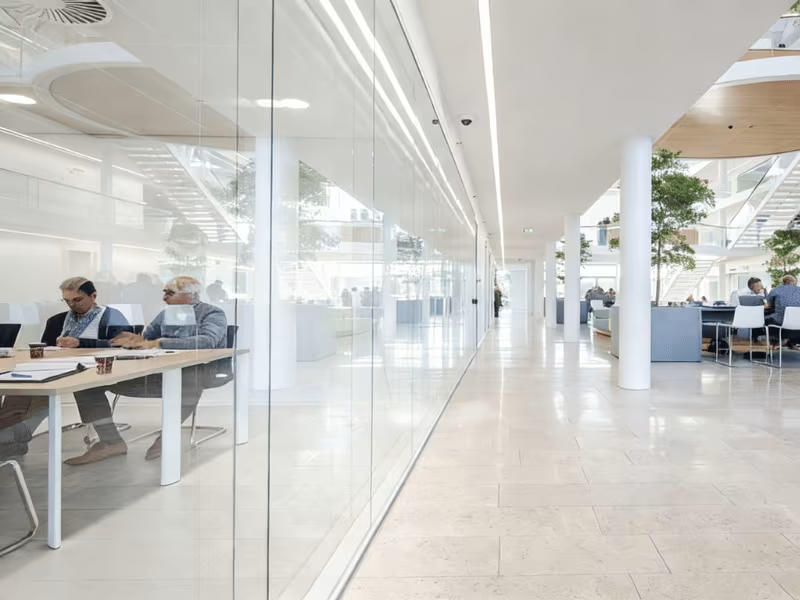
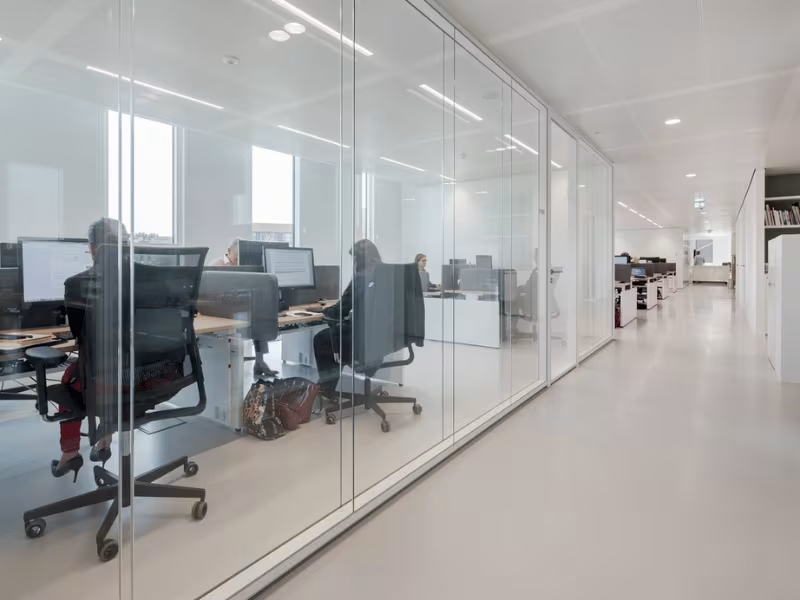
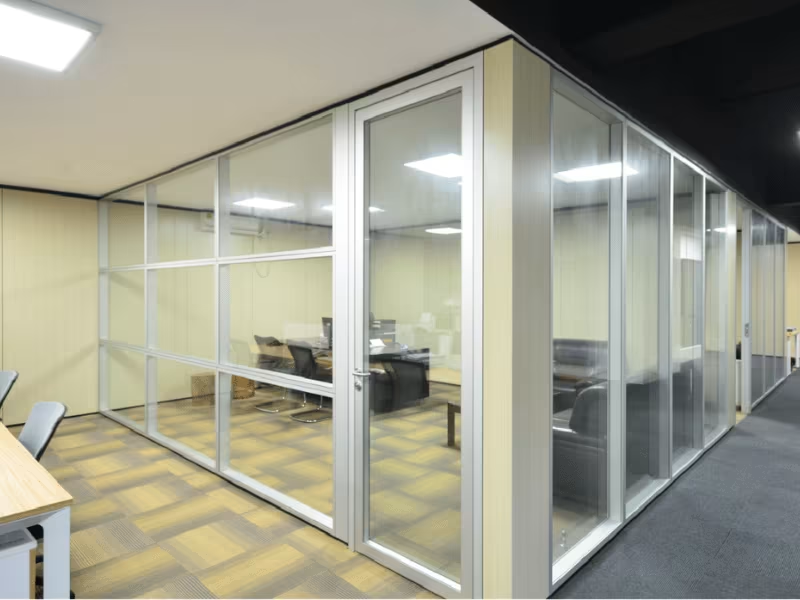
Ideal for environments that want to maintain a sense of openness while clearly defining functional zones, such as executive offices, meeting rooms, and collaborative team areas. Common configurations include panoramic glass or slim-framed systems, allowing natural daylight to flow while creating refined spatial boundaries.
Full-Height Office Partitions
Perfect for spaces requiring complete integration with the building structure or ceiling system. Typical applications include corridor separations, perimeter offices, and long-term fixed layout areas. This design prioritizes structural continuity, exceptional privacy, and overall stability.
Acoustic Office Partitions
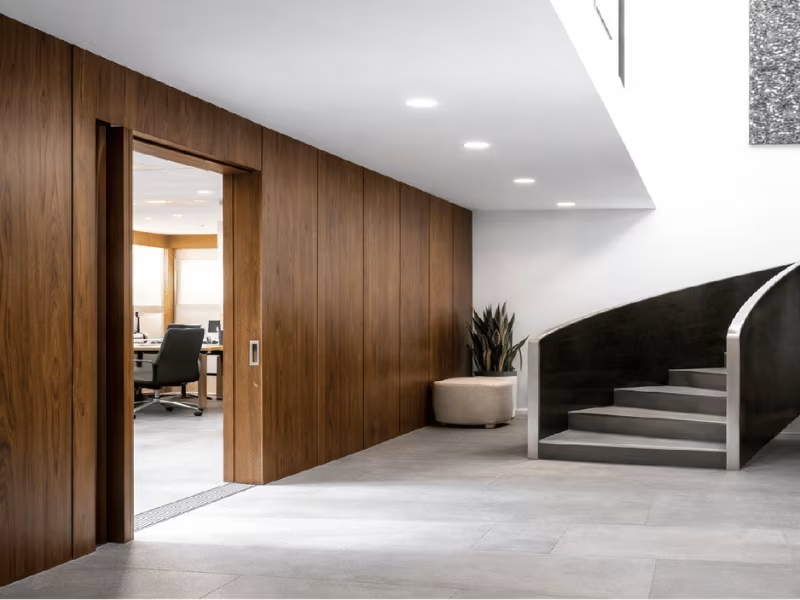
Engineered for spaces with strict acoustic requirements, such as executive suites, client meeting rooms, finance departments, and focus work zones. Through precision modular construction, the system delivers two-way sound control, balancing an open-plan ambiance with absolute confidentiality.
Fire-Rated Office Partitions
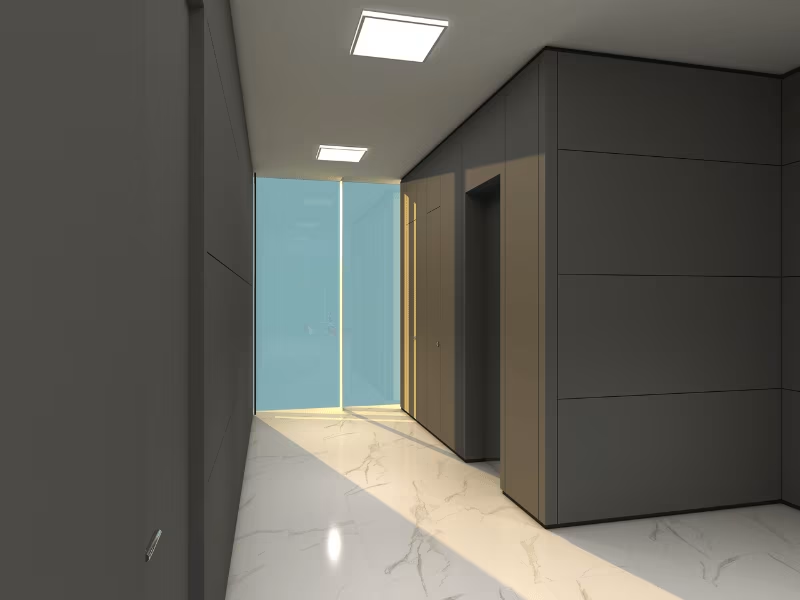
Designed for environments that must comply with strict fire safety codes and building compartmentation requirements. These are essential for public buildings, egress path divisions, and projects requiring special regulatory approvals. They deliver certified fire performance without sacrificing the spatial flexibility needed for future changes.
Demountable vs. Traditional Office Wall Construction
When fitting out commercial spaces, facility managers constantly weigh modular wall systems against traditional drywall. The key differences fall into three main categories:
1. Layout Flexibility
- Modular Partitions: Easily demounted, reconfigured, and relocated as your business needs evolve.
- Traditional Drywall: Fixed permanently upon installation. Modifications demand destructive demolition and complete reconstruction.
2. Operational Disruption
- Modular Partitions: Require a fraction of the installation time, generate virtually no dust, and allow for zone-by-zone setup. This drastically reduces office disruption and enables quick localized adjustments.
- Traditional Drywall: Involves lengthy installation timelines, generates heavy dust, requires multiple messy trades (taping, mudding, painting), and typically forces work stoppages.
3. Long-Term Asset Value
- Modular Partitions: Function as a tangible asset. You can reuse the materials when relocating, helping you retain your initial investment.
- Traditional Drywall: A sunk cost. Modifications involve demolition, expensive waste disposal, and zero material reuse potential.
Start With the Right Partition Strategy
Even within the same category of partition systems, the ideal configuration varies wildly based on your specific client needs and spatial conditions. The key is tailoring the system to your needs and adapting it to your site. Consider these three critical aspects:
1. Privacy Requirements
- Visual separation only (e.g., standard open spaces).
- Speech privacy (e.g., conversations remain unintelligible from the corridor).
- Confidential acoustic isolation (e.g., sensitive discussions remain completely private).
2. Ceiling & Structural Conditions
- Partitions terminating precisely at the suspended ceiling height.
- Acoustic barriers installed in the plenum above the partition to block sound transmission.
- Walls anchored directly from the floor to the raw structural slab.
3. Future Layout Expectations
- The spatial function will remain largely unchanged for the next 5–10 years.
- The layout will evolve over the next 1–2 years as the team scales rapidly.
- The spatial configuration must be adjustable at a moment’s notice based on immediate user needs.
Why Work With Us
We provide commercial-grade engineering support and unyielding quality assurance, specifically designed for high-stakes projects.
Engineering Support
1. Free layout advisory upon request.
2. Project-specific configuration guidance.
3. Tender-ready specification wording.
4. Comprehensive detail drawing library support.
Quality & Manufacturing
* 8-year comprehensive system warranty.
* 3–4 day rapid sample turnaround.
* No minimum order quantity required.
* Premium AkzoNobel powder coating.
* SGS-certified structural and acoustic materials.
FAQs
Q: What is the difference between a fire-rated wall and a fire-resistant wall?
A: The terms are often used interchangeably, but a fire-rated wall refers to a complete wall assembly that has been officially tested and certified to meet a defined time rating (30/60/90/120 minutes). A fire-resistant wall generally describes materials or components with resistance to fire, but may not be tested as a full system. Our walls are certified fire-rated wall assemblies, not just fire-resistant materials.
Q: Can I reuse fire-rated partitions in a different building?
A: Yes. Our fire-rated demountable walls are designed for reuse and reconfiguration. Most components can be disassembled, relocated, and reinstalled while retaining their fire performance — as long as they are installed within the certified system boundaries and follow approved installation guidelines.
Q: How do I know if my office needs a 30-minute or 60-minute fire rating?
A: The required fire rating is determined by local building codes, project type, occupancy, and fire compartment design. Common standards include 30-minute, 60-minute (1-hour), 90-minute, and 120-minute (2-hour) ratings. We provide certified systems for all four ratings to meet regulatory requirements for offices, healthcare, education, and public buildings.
Q: Are fire-rated demountable walls also soundproof?
A: Yes. Our SG-100 fire-rated wall system provides excellent acoustic performance in addition to fire resistance. The steel-core structure, continuous sealing, and layered panel design deliver reliable sound reduction, making these walls suitable for spaces that need both fire safety and speech privacy.
Q: Does changing the configuration require a new fire safety inspection?
A: If you reconfigure the wall within the certified system limits (using approved components, panels, doors, and installation methods), no new full system test is required. However, you must always follow local authority requirements and ensure the final installation complies with building regulations.
Q: Can fire-rated glass partitions be frameless?
A: No. For certified fire-rated performance, glass partitions must use a framed system with tested structural framing, fire-rated seals, and compatible door assemblies. Frameless glass cannot provide the structural integrity or continuous fire-stopping required to achieve official fire ratings.
