

Open-plan offices remain common across many industries, but noise, interruptions, and a lack of privacy continue to affect employee performance and comfort. In response, many companies are turning to enclosed workplace solutions like office phone booths and office pods.
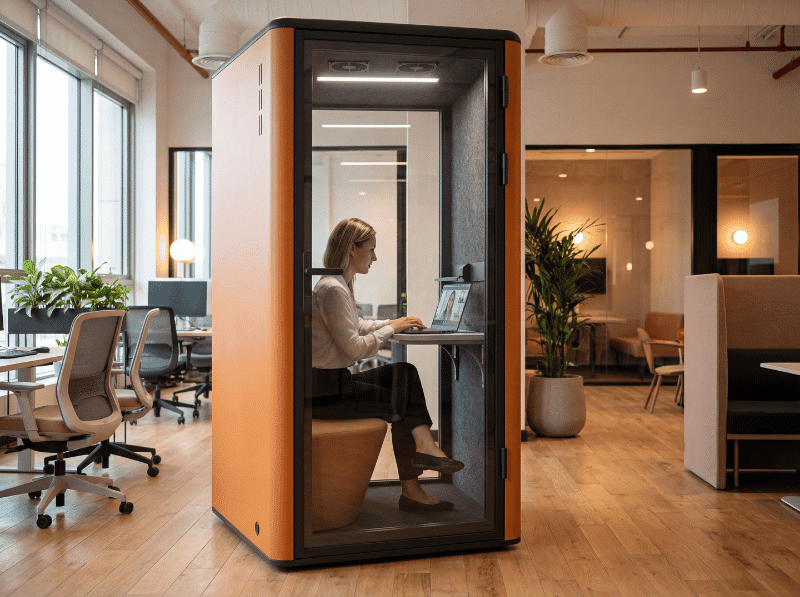
Office phone booths are compact, enclosed spaces designed for one person to make calls or join video meetings without disturbing others. Office pods are larger, enclosed units that can support one-on-one meetings, small-team sessions, or focused solo work, depending on their size and layout.
These solutions have become increasingly relevant because they help reduce background noise, improve speech privacy, and create quiet zones in busy offices without requiring permanent construction. Instead of rebuilding entire floor plans, businesses can add private spaces where employees need them most.
In 2026, demand for office phone booths and office pods continues to rise as hybrid work reshapes office design. Companies want flexible workplaces that support both collaboration and concentration, and modular enclosed spaces offer a practical way to meet those changing needs.
Types of Office Phone Booths and Office Pods
Traditional meeting rooms can be expensive to build and difficult to scale as workplace needs change. For that reason, it’s important to invest in office phone booths and office pods that are right for your floor plan, team size, and daily work patterns.
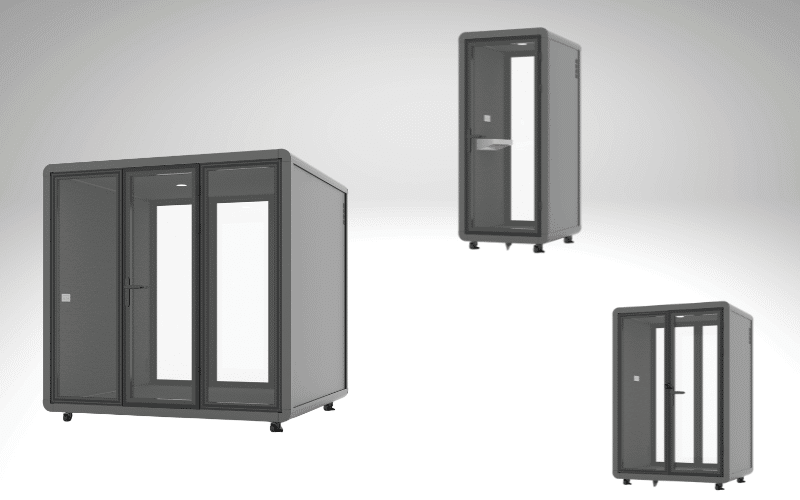
Fortunately, several workplace enclosure solutions are available. These include:
Single-person phone booths: These compact units are designed for private calls, video meetings, and short focus sessions. They usually include ventilation, lighting, a small desk surface, and power outlets.
A standard single-person office phone booth typically costs between $4,500 and $8,500, depending on the acoustic rating and interior features.
| Type | Typical Cost |
|---|---|
| Single-person booth | $4,500 |
| Two-person pod | $8,900 |
| Four-person meeting pod | $14,500 |
Two-person pods: These small pods are ideal for private conversations, interviews, and quick collaboration without needing to book a meeting room. Larger soundproof meeting pods can accommodate four or more people and often include seating, integrated lighting, improved ventilation, and enhanced acoustic panels for extended use.
A two-person pod generally costs around $8,900, while a four-person soundproof pod may cost about $14,500.
In addition, other workplace privacy solutions are available for modern offices, such as acoustic dividers, quiet rooms, movable wall systems, and semi-enclosed focus booths for short individual work sessions.
Office Phone Booths vs. Office Pods
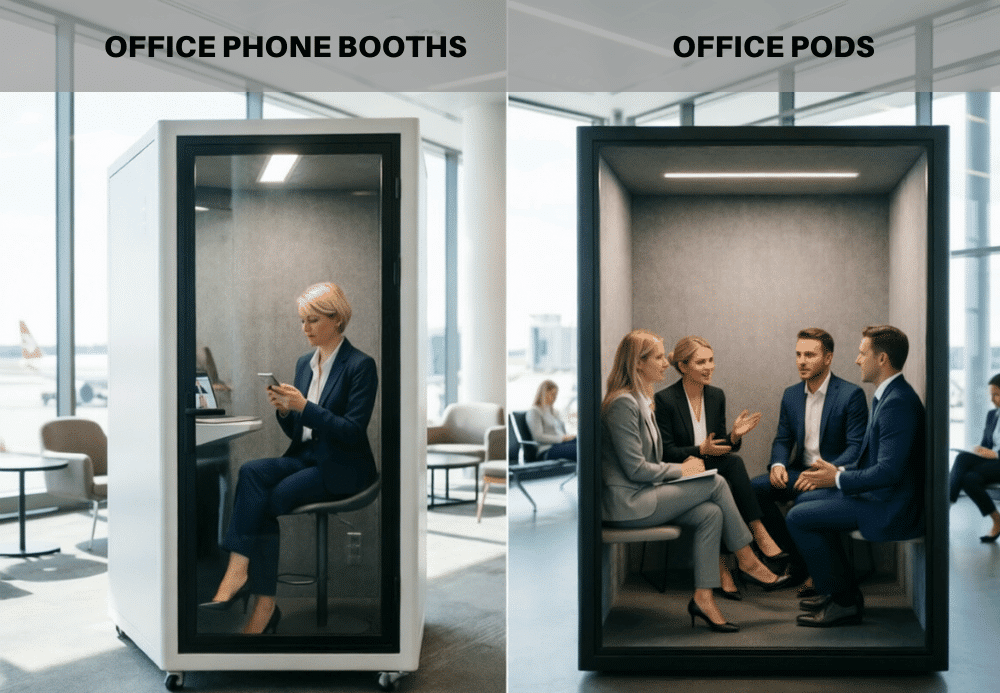
Both office phone booths and office pods are designed to create private space in busy workplaces, but they differ in the amount of space they provide and in how employees use them. Office phone booths are usually built for one person and are best for calls, virtual meetings, and heads-down tasks. Office pods are larger and can support several people, making them more suitable for collaboration, interviews, and small in-person meetings.
Office phone booths generally take up less floor space and are easier to place in open-plan offices where every square foot matters. They also tend to cost less than larger pods. Office pods, however, offer greater flexibility because they can serve multiple purposes throughout the day. A team might use a pod for a private meeting in the morning and individual-focused work in the afternoon.
Both options can improve the employee experience; however, the right choice depends on your office layout, budget, and the type of work your team does most often.
The Pros and Cons of Office Phone Booths and Office Pods
There are many benefits to adding office phone booths and pods, along with a few disadvantages. The main outcomes for businesses include:
Pros
Improved productivity and focus: Enclosed booths and pods help employees step away from background chatter and visual distractions. This can make it easier to complete focused work, join calls clearly, and stay productive in fast-moving open office environments.
Enhanced privacy for calls and meetings: These units create a more controlled setting for conversations that should not happen at an open desk. They are especially useful for HR discussions, client calls, interviews, and video meetings where clear audio and confidentiality matter.
Flexible and modular design: Many office booths and pods are prefabricated and movable, giving companies greater flexibility as teams grow or workplace layouts change. This makes them useful for businesses that expect shifting attendance patterns or continued hybrid work in 2026.
Reduced need for permanent construction: Compared with building new rooms, booths and pods can often be installed faster and with less disruption. That gives employers a way to improve privacy and acoustics without long renovation timelines or major structural changes.
Better workplace experience: Employees often value having access to quiet, comfortable spaces for focused work and private calls. When used well, booths and pods can support well-being, reduce frustration, and make the office feel more functional for different work styles.
Cons
High upfront costs: Depending on the size, materials, and acoustic performance, office booths and pods can require a significant initial investment. Businesses may also need to budget for delivery, assembly, electrical access, and interior upgrades.
Space limitations: Smaller offices may struggle to fit enclosed units without making the main workspace feel crowded. Even compact booths need clearance, airflow, and thoughtful placement to avoid disrupting movement or reducing usable desk space.
Maintenance and ventilation issues: Like any enclosed workspace feature, booths and pods need regular cleaning, upkeep, and monitoring. If ventilation systems are weak or poorly maintained, the space can feel stuffy during longer calls or meetings.
Potential underuse: If employees are unsure when or how to use them, booths and pods may remain empty for much of the day. Poor booking habits or unclear etiquette can also create friction among teams.
Acoustic expectations may vary: Not every product is fully soundproof. Some units reduce noise very well, while others mainly soften sound. If buyers expect total silence without checking specifications, they may be disappointed with the real-world performance.
When to Choose Office Phone Booths and Office Pods
Office phone booths and office pods have become practical solutions for businesses seeking more privacy without committing to major renovations. While many employers are redesigning offices for hybrid work, these enclosed spaces are especially useful in open-plan environments where calls, video meetings, and focused work happen side by side.
The benefits of office phone booths and office pods can only be fully realized if employees use them properly and consistently. For that reason, you should choose these solutions only if you can clearly explain when they should be used, how long they should be occupied, and what types of work they are intended to support.
Outside of that, if your office rarely handles private calls or already has enough enclosed meeting rooms, it may make more sense to invest in an alternative acoustic solution instead.
Are you trying to decide whether your workplace needs more private space? Consider evaluating how often employees struggle with noise, meeting room shortages, and hybrid collaboration before making a purchase.
Alternatives to Office Phone Booths and Office Pods
Let’s look at some workplace alternatives to office phone booths and office pods:
Noise-canceling headphones: These can help employees block out distractions at their desks and are often less expensive than enclosed office furniture. However, they do not provide speech privacy for calls or meetings.
Acoustic wall panels and ceiling treatments: Sound-absorbing materials can reduce echo and lower overall office noise. While they improve the acoustic environment, they do not create dedicated private spaces for confidential conversations.
Quiet zones and library-style areas: Setting aside parts of the office for silent work can support concentration without adding enclosed units. This approach is simple to implement, but it depends heavily on employee behavior and office culture.
Traditional meeting rooms: Existing rooms can be repurposed for calls and solo work when not booked for team meetings. This may reduce the need for pods, but fixed rooms are less flexible and usually cost more to build and maintain.
Get Projections for Implementing Office Phone Booths and Pods
Traditional office layouts can be inefficient when employees need both collaboration space and privacy. So, it’s important to invest in workplace solutions that are right for your team size, office footprint, and day-to-day work patterns.
Workplace planning tools, occupancy data platforms, and office design consultants can help businesses estimate the return on investment of office phone booths and office pods. You can model usage rates, compare installation costs with renovation costs, evaluate square-footage efficiency, and identify which pod sizes make the most sense for your space.
If you want to improve privacy, reduce distractions, and better support hybrid work, now is a good time to explore office booth and pod solutions tailored to your workplace. If you have any questions, please contact our team of experts for assistance.